The Deep Work Deficit: How Calendar Culture Is Quietly Dismantling Engineering Excellence
The Illusion of a Productive Engineering Floor
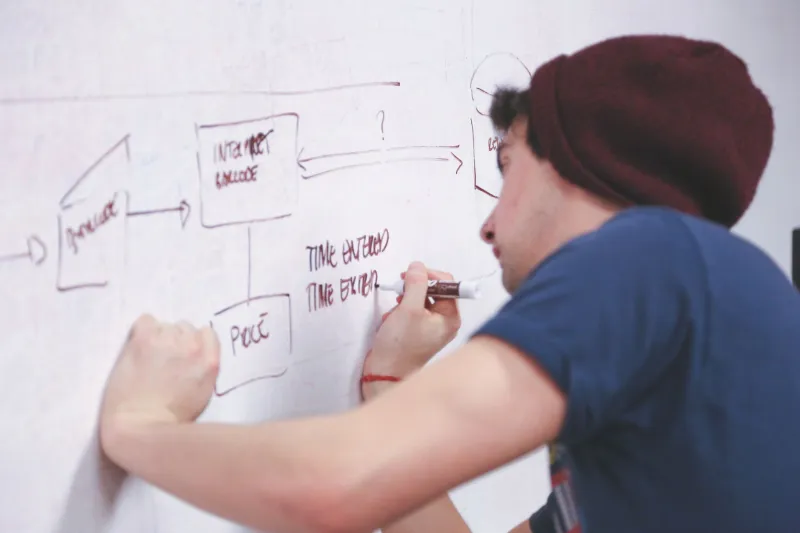
Walk through the open floor plan of almost any mid-sized technology organization in the United States, and you will observe what appears, on the surface, to be a thriving engineering culture. Monitors display dense lines of code. Slack notifications pulse rhythmically. Engineers gather around whiteboards. Calendars are full.
Full calendars, it turns out, may be precisely the problem.
For many engineering leaders, busyness has quietly become a proxy for productivity—and the two are not only different, they are frequently in direct opposition. The same organizational behaviors that signal engagement to executives are, in practice, systematically preventing engineers from doing the work that actually drives business value.
This is not a minor operational inefficiency. It is a structural condition with measurable financial consequences, and it deserves the same analytical rigor that technology leaders apply to system architecture or infrastructure spend.
What the Research Actually Says About Engineering Focus
The science of knowledge work productivity is no longer speculative. Decades of research, including foundational work by cognitive psychologist Gerald Weinberg and more recent studies from organizations like Microsoft Research and the University of California, Irvine, converge on a consistent finding: meaningful software development requires sustained, uninterrupted cognitive engagement.
The UC Irvine research, widely cited in engineering management circles, found that it takes an average of 23 minutes for a knowledge worker to return to a task after an interruption. For engineers engaged in complex problem-solving—debugging distributed systems, designing data models, architecting API contracts—the recovery cost is often considerably higher.
Consider the arithmetic. An engineer interrupted three times in a four-hour block does not lose fifteen minutes. In realistic terms, they may lose the entire block's potential for deep, compounding progress. When that pattern repeats across a five-day week, the cumulative loss is not measured in hours. It is measured in quarters of delayed delivery.
Yet the average software engineer at a US technology company attends between six and ten meetings per week, with that number rising sharply at the senior and staff engineer levels—precisely the roles responsible for the highest-leverage technical decisions.
Why Meeting Culture Persists Despite Its Costs
If the productivity math is this clear, why does the problem persist? The answer lies in a set of organizational incentives that are easier to feel than to examine critically.
First, synchronous communication creates the perception of alignment. When stakeholders and engineers share a video call, everyone leaves with a sense that the problem has been addressed. Whether that perception reflects reality is a separate question. Asynchronous alternatives—written briefs, recorded walkthroughs, documented decision logs—require more discipline to produce and more effort to consume, which makes them feel less efficient even when they are demonstrably more effective.
Second, meetings are visible. A calendar packed with cross-functional syncs signals engagement to managers, peers, and organizational leadership. Deep work, by contrast, is invisible. An engineer spending four uninterrupted hours working through a complex architectural challenge produces nothing a manager can observe in real time—and in cultures where visibility is conflated with value, that invisibility carries professional risk.
Third, the costs of meeting culture are diffuse. No single meeting destroys a sprint. The damage accumulates gradually, masked by velocity metrics that measure output without accounting for the quality and strategic depth of what is being built.
The Context-Switching Tax on System Quality
Beyond raw productivity loss, fragmented engineering time carries a subtler but equally serious consequence: it degrades the quality of technical thinking.
Software architecture is not a task that scales with time in a linear fashion. The ability to reason about system interdependencies, anticipate failure modes, and design for long-term maintainability depends on holding a complex mental model in working memory. That model is extraordinarily fragile. A context switch does not merely pause the work—it collapses the scaffolding.
This is why organizations with chronically fragmented engineering calendars tend to accumulate technical debt at rates that cannot be explained by headcount or tooling alone. The debt is not the result of engineers making poor decisions. It is the result of engineers making decisions under cognitive conditions that make careful reasoning nearly impossible.
The downstream effects compound. Systems built under fragmented conditions require more maintenance, generate more incidents, and resist modification more aggressively than those built with adequate focus time. The meeting culture that slows delivery also increases the long-term cost of everything the engineering team produces.
Structural Interventions That Actually Protect Deep Work
Addressing this problem requires more than encouraging engineers to block focus time on their calendars. Individual calendar hygiene cannot overcome organizational defaults. The interventions that produce lasting change operate at the system level.
Establish protected engineering blocks as an organizational policy, not a personal preference. High-performing engineering organizations—including several well-documented examples in the US technology sector—have formalized morning focus periods during which meetings are prohibited by default. This shifts the burden of justification: rather than engineers defending their need for uninterrupted time, meeting organizers must justify why synchronous communication cannot wait.
Redesign the default communication stack toward asynchronous-first. Not every decision requires a meeting. Many benefit from written proposals, structured comment threads, or recorded walkthroughs that participants can engage with on their own schedules. Organizations that invest in asynchronous communication infrastructure—clear documentation standards, decision logs, async review processes—reduce meeting volume without sacrificing alignment.
Measure engineering output by outcomes, not observable activity. When performance evaluation rewards visible engagement over substantive delivery, engineers rationally optimize for meetings. Leadership teams that shift evaluation frameworks toward business impact—features shipped, systems stabilized, technical debt retired—remove the incentive to treat calendar density as a professional signal.
Audit meeting recurrence ruthlessly. Recurring meetings are the most insidious source of fragmentation because they persist long after their original purpose has been served. A quarterly audit that requires meeting organizers to restate the business case for each standing sync—and that defaults to cancellation rather than continuation—can eliminate a significant portion of low-value synchronous time.
Reclaiming the Conditions for Excellence
The organizations that will define the next generation of digital infrastructure are not necessarily those with the largest engineering headcounts or the most sophisticated tooling stacks. They are the organizations that understand what engineering excellence actually requires—and that design their operating models accordingly.
Protecting deep work time is not a quality-of-life benefit. It is a competitive strategy. Every hour recovered from low-value synchronous overhead is an hour available for the kind of sustained, careful technical thinking that produces systems worth building.
For business leaders evaluating their digital transformation partnerships, this distinction matters. A development organization that treats engineering focus as a structural priority—not an aspirational goal—will consistently outperform one that mistakes calendar density for organizational health.
The calendar is not a neutral artifact. It is a reflection of what an organization actually values. For engineering teams serious about delivering at the level modern business demands, it is long past time to examine that reflection honestly.