Unlocking Legacy Value: How API-First Architecture Turns Aging Enterprise Systems Into Engines of Growth
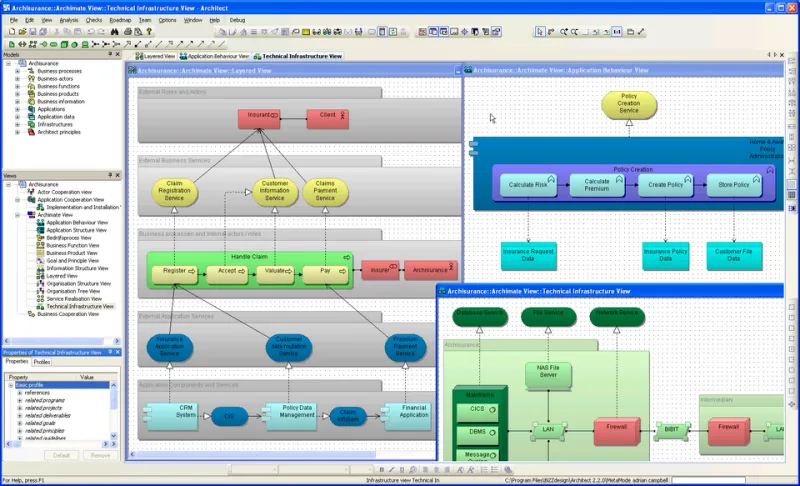
Photo: Adrian Campbell, CC BY-SA 3.0, via Wikimedia Commons
The Modernization Paradox
Ask any enterprise technology leader in the United States about their legacy systems, and you will hear a familiar tension. On one side: years of business logic, regulatory compliance configurations, and mission-critical data that cannot simply be discarded. On the other: the mounting pressure to integrate AI capabilities, launch mobile experiences, connect with modern SaaS platforms, and respond to market shifts faster than competitors built on leaner stacks.
The traditional answer to this tension—the complete system rewrite—has a well-documented failure rate. Gartner estimates that large-scale legacy replacement projects fail or significantly underdeliver more than 70 percent of the time, consumed by scope creep, organizational disruption, and the sheer complexity of replicating decades of embedded business logic.
In 2024, the most forward-looking enterprises are pursuing a fundamentally different strategy: rather than replacing legacy systems, they are wrapping them in modern API layers that expose their value to the broader technology ecosystem. The result is incremental modernization that delivers compounding returns without the catastrophic risk of a full replacement.
What API-First Architecture Actually Means
The term "API-first" is sometimes used loosely, but its technical meaning carries important strategic implications. An API-first architecture treats application programming interfaces not as an afterthought—something bolted on after the core system is built—but as the primary design artifact. Every capability, every data entity, every business function is designed to be accessible through a well-defined, versioned interface before the underlying implementation is finalized.
Applied to legacy modernization, this philosophy enables what architects call the "strangler fig" pattern—a gradual approach in which new API layers are built around existing systems, progressively absorbing their functionality until the legacy core can be retired at low risk. The metaphor is apt: the new architecture grows around the old one, drawing value from it while simultaneously replacing it.
When combined with microservices—discrete, independently deployable service components—this approach allows organizations to modernize one capability at a time, in priority order, without disrupting the operations that depend on the broader system.
The Business Case: Speed, Integration, and Market Agility
The strategic value of API-first modernization becomes clearest when examined through specific business outcomes.
Faster partner and vendor integration is often the most immediately measurable benefit. A national insurance carrier on the East Coast that Samvruddhi Developers worked with had spent years managing point-to-point integrations between its policy administration system and dozens of third-party data providers. Each new integration required six to twelve weeks of custom development. After implementing a standardized API gateway layer over the legacy platform, the average integration timeline dropped to under two weeks—a change that directly accelerated their ability to launch new products and onboard distribution partners.
Cross-functional team empowerment is a less obvious but equally significant outcome. When business capabilities are exposed through clean APIs, product teams, data scientists, and business analysts can access and build upon core systems without requiring deep involvement from the platform engineering team. This organizational decoupling—what technology strategists call reducing "cognitive load"—allows enterprises to scale innovation across the business rather than concentrating it in a single engineering bottleneck.
New technology integration becomes structurally simpler. In 2024, organizations racing to incorporate generative AI, real-time analytics, and advanced automation into their operations face a fundamental constraint: most of these capabilities require clean, accessible data and function calls. Legacy systems with no API surface area are, by definition, excluded from this innovation wave. An API-first architecture creates the connective tissue that allows modern capabilities to draw on legacy data and trigger legacy business logic without requiring those systems to be rebuilt from the ground up.
Architectural Principles That Drive Outcomes
Successful API-first modernization does not happen by accident. It requires adherence to a set of architectural principles that distinguish sustainable transformation from a new layer of complexity.
Design for consumers, not implementation. APIs should be designed around the needs of the systems and teams that will consume them—not around the data structures of the underlying legacy system. This requires upfront investment in interface design and often reveals legacy data models that need to be abstracted or normalized at the API layer.
Version deliberately. API versioning is not a technical formality; it is a business continuity mechanism. Well-governed versioning allows the underlying implementation to evolve without breaking the downstream systems and partners that depend on stable interfaces.
Invest in the API gateway. The gateway layer—which handles authentication, rate limiting, observability, and routing—is the operational foundation of an API-first architecture. Organizations that underinvest here create security vulnerabilities and operational blind spots that undermine the entire modernization effort.
Treat APIs as products. The most mature API-first organizations apply product management discipline to their API portfolios: maintaining documentation, gathering developer feedback, tracking adoption metrics, and iterating based on usage patterns. This mindset shift—from APIs as infrastructure to APIs as products—correlates strongly with successful enterprise adoption.
A Measured Transformation, Not a Revolution
One of the most important reframes that API-first architecture enables is the shift from modernization as a one-time event to modernization as a continuous capability. Rather than planning a three-year replacement program with a single high-risk cutover, organizations can sequence their modernization work in six-to-twelve-week increments, each delivering measurable value and reducing overall system risk.
This incremental approach also allows organizations to build internal modernization competency over time—developing the architectural judgment, operational discipline, and cross-functional alignment that large-scale transformation requires. By the time the legacy core is ready to be retired, the organization has already proven its ability to operate in the new paradigm.
For enterprises feeling the competitive pressure of slower systems and fragmented integrations, the message from the most successful 2024 modernization efforts is consistent: the path forward does not require abandoning what you have built. It requires building the architecture that allows what you have built to participate fully in the digital ecosystem your business now operates within.
At Samvruddhi Developers, our API-first modernization engagements begin with a capability mapping exercise that identifies where legacy value is trapped and where modern interfaces can unlock it fastest. The goal is never transformation for its own sake—it is competitive advantage, delivered incrementally and built to last.