Distributed by Default: Why Microservices Architecture Often Costs More Than It Delivers

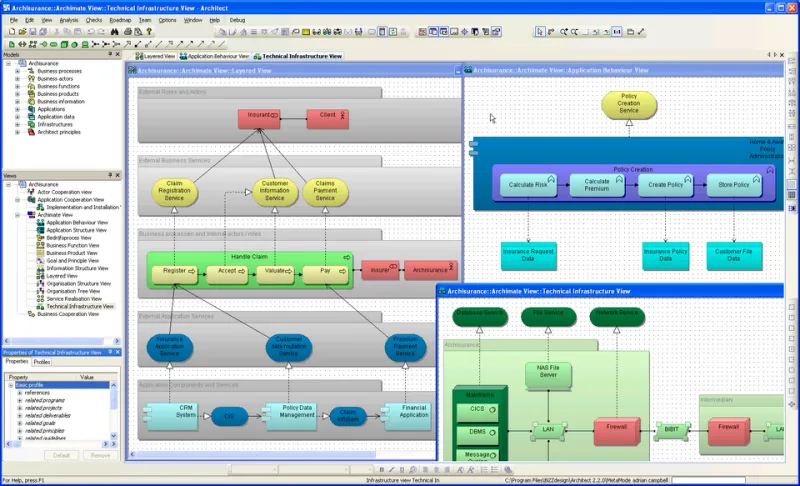
Photo: HirokiSayama, CC BY-SA 4.0, via Wikimedia Commons
For the better part of a decade, microservices have occupied a near-mythological status in enterprise technology conversations. Agility. Independent deployability. Team autonomy. The vocabulary is compelling, and the case studies from Netflix, Amazon, and Uber have been cited so frequently they have achieved the weight of doctrine. Yet for every organization that has successfully navigated the transition to distributed architecture, a quieter majority has discovered that decomposing a monolith did not eliminate complexity—it simply relocated it.
The question facing modern technology leaders is not whether microservices work. They do, under the right conditions. The more precise question is whether the conditions that made microservices transformative for hyperscale technology companies apply to your organization—and whether the investment required to operate them responsibly is one your business can genuinely sustain.
The Allure and the Architecture Tax
Microservices promise organizational alignment. When services map cleanly to bounded domains, teams can theoretically develop, deploy, and scale their components without coordinating with every other group in the engineering organization. In principle, this mirrors Conway's Law in a productive direction: system architecture reflects team structure, and team structure reflects business capability.
In practice, the architecture tax arrives quickly and compounds silently. A mid-sized enterprise that decomposes its platform into forty discrete services has not reduced its operational surface area—it has multiplied it. Each service demands its own deployment pipeline, monitoring configuration, alerting threshold, and failure mode documentation. Infrastructure that once required a handful of engineers to maintain now requires a platform engineering team with expertise in container orchestration, service mesh configuration, distributed tracing, and secrets management.
This overhead is not incidental. It is structural. And for organizations that lack the engineering density to absorb it, microservices can become the most expensive architectural decision in their history.
When Latency Becomes a Business Problem
Network latency is one of the most underestimated costs of distributed systems. In a well-designed monolith, a complex business transaction involves in-process function calls that execute in microseconds. In a microservices environment, that same transaction may traverse four, six, or ten service boundaries—each hop introducing network overhead, serialization cost, and a new failure surface.
For consumer-facing applications where response time directly influences conversion rates, this latency compounds into measurable revenue impact. A checkout flow that previously completed a payment authorization in 180 milliseconds may now require 400 milliseconds as the request fans out across inventory, pricing, fraud detection, and fulfillment services. The architectural elegance is real. The user experience degradation is equally real.
Engineering teams often respond by introducing caching layers, asynchronous messaging queues, and event-driven patterns to mitigate synchronous call chains. These solutions are legitimate, but each one adds operational complexity and introduces new categories of failure—cache invalidation errors, message ordering guarantees, and eventual consistency bugs that are notoriously difficult to reproduce in development environments.
Debugging in a Distributed World
Perhaps no hidden cost is more viscerally felt by engineering teams than the debugging experience in a distributed system. When a request fails in a monolithic application, the stack trace is contained. The failure surface is bounded. A senior engineer can often diagnose the issue within minutes.
In a microservices environment, a failed request may have traversed multiple services before encountering an error condition. Without mature distributed tracing infrastructure—tools like Jaeger, Zipkin, or a commercial observability platform—identifying the precise service and code path responsible for a failure can consume hours or days of engineering time. The cognitive overhead of holding an entire distributed call graph in memory while debugging is substantial, and it falls disproportionately on the most experienced engineers in the organization.
This debugging tax does not disappear as teams mature. It persists as a recurring operational cost that must be weighed honestly against the deployment flexibility that microservices provide.
Team Fragmentation and the Coordination Paradox
Microservices are frequently justified on organizational grounds: smaller, autonomous teams that own discrete services move faster and require less coordination overhead. This is true when service boundaries are stable and well-defined. It becomes a liability when business requirements cut across service boundaries—which, in most enterprises, is the majority of meaningful feature work.
A new capability that requires changes to three services owned by three separate teams introduces coordination overhead that can rival or exceed the overhead of the monolith the organization was trying to escape. API contract negotiations, versioning discussions, and deployment sequencing across team boundaries are not eliminated by microservices—they are institutionalized.
Organizations that adopt microservices without simultaneously investing in platform standardization, internal developer portals, and clear service ownership models frequently find that team autonomy in theory translates to team fragmentation in practice.
A Framework for Honest Evaluation
None of this is an argument against microservices as an architectural pattern. It is an argument for applying them deliberately, at the appropriate scale, with a clear-eyed accounting of the operational investment required.
Before committing to a distributed architecture, technology leaders should evaluate four dimensions honestly:
Scale justification. Does the organization's traffic volume, team size, or deployment frequency actually require independent scalability at the service level? For organizations deploying fewer than ten times per day with fewer than fifty engineers, the answer is often no.
Platform readiness. Does the organization have—or can it build—the observability, orchestration, and developer tooling infrastructure that responsible microservices operation requires? Adopting microservices without this foundation is borrowing complexity against a debt that will eventually come due.
Domain clarity. Are the service boundaries well-understood and stable? Prematurely decomposing a domain that is still evolving produces services whose boundaries will require expensive renegotiation as the business changes.
Operational maturity. Does the engineering organization have experience operating distributed systems, or will the learning curve itself become a source of instability?
The Modular Monolith as a Strategic Intermediate
For many organizations, the most pragmatic path forward is not a binary choice between a legacy monolith and a fully distributed microservices architecture. A well-structured modular monolith—one that enforces clear domain boundaries internally while deploying as a single unit—can deliver significant agility and maintainability benefits without the operational overhead of distributed services.
This architecture preserves the option to extract services selectively as scale or team structure genuinely demands it, rather than decomposing the entire system in anticipation of a scale that may never materialize.
Making Architecture Serve the Business
The most consequential architectural decisions are not made in the abstract. They are made in the context of a specific organization's capabilities, constraints, and competitive priorities. At Samvruddhi Developers, our engagement process begins with an honest assessment of where a client's engineering organization actually stands—not where architectural fashion suggests it should aspire to be.
Distributed architecture can be a genuine competitive advantage. It can also be an expensive distraction that consumes engineering capacity that would deliver more value applied elsewhere. The discipline to distinguish between these outcomes is not a technical skill. It is a strategic one.